As we recognize National CPR & AED Awareness Week (June 1–7), it’s a good time to ask yourself a simple but important question:
If someone suffered a sudden cardiac arrest in front of you today, would you know how to help?
Every year, more than 350,000 people experience an out-of-hospital cardiac arrest in the United States. The reality is that most of these emergencies happen at home, at work, during sporting events, or in public places—often before emergency responders can arrive. The actions taken by bystanders during those first few minutes can make the difference between life and death.
Research has consistently shown that immediate CPR and rapid AED use can double or even triple a person’s chance of survival. Unfortunately, many people still hesitate to act because they lack confidence or are afraid of making a mistake.
“What if I do something wrong?”
This is the concern we hear most often during our CPR classes.
The truth is that when someone is in sudden cardiac arrest, doing nothing is almost always the worst option. Without blood flow to the brain and vital organs, irreversible damage begins within minutes.
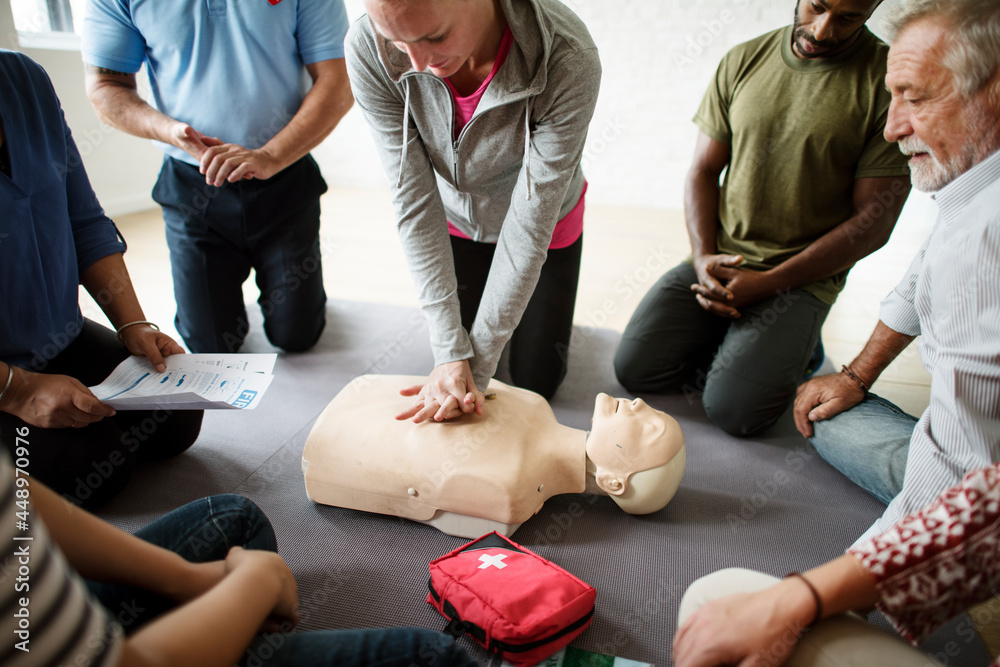
Even if you’ve never performed CPR before, pushing hard and fast in the center of the chest can help circulate oxygen-rich blood until professional help arrives. Perfect CPR isn’t the goal—taking action is.
“Someone else will probably help.”
Many people assume another bystander will step in. Unfortunately, everyone else is often thinking the same thing.
When an emergency occurs, don’t wait for someone else to take charge. Call 911, start CPR if needed, and direct others around you:
- “You call 911.”
- “You find the AED.”
- “You help clear space.”
Simple directions can transform a crowd of observers into a team of rescuers.
“I’m afraid of using an AED.”
Automated External Defibrillators (AEDs) were specifically designed for ordinary people, not just healthcare professionals.
Modern AEDs provide clear voice prompts that walk rescuers through every step. The device analyzes the victim’s heart rhythm and will only deliver a shock if one is actually needed. It is virtually impossible to accidentally shock someone who does not require it.
At Emergency and Safety Trainers, LLC, we often remind people that AEDs don’t save lives sitting in a cabinet—they save lives when someone has the confidence to use them.
Every Minute Matters
For every minute that passes without CPR and defibrillation, the chance of survival decreases significantly.
That’s why we strongly encourage businesses, schools, churches, childcare facilities, sports organizations, and community groups to not only have an AED available but also ensure their staff members are trained to respond confidently.
In many rural communities, including those served by volunteer fire departments and extended EMS response times, the actions of bystanders become even more critical.
Don’t Let Fear of Liability Stop You
Many people worry about legal consequences if they attempt to help.
Fortunately, Good Samaritan laws exist to protect individuals who provide emergency assistance in good faith. These laws are designed to encourage people to help during emergencies, not discourage them.
Confidence Comes From Training
Most people don’t hesitate because they don’t care—they hesitate because they don’t know what to do.
The good news is that CPR, AED, and First Aid training can change that in just a few hours.
At Emergency and Safety Trainers, LLC, our instructors are active and former first responders who bring real-world experience into every class. We offer training for individuals, families, businesses, schools, healthcare providers, childcare facilities, churches, and community organizations throughout Missouri and across the United States.
This CPR & AED Awareness Week, take a moment to consider whether you, your family, your employees, or your organization are prepared to respond when seconds count.
Because when sudden cardiac arrest occurs, the life that needs saving could belong to a coworker, a friend, a customer, a loved one—or even a complete stranger.
To learn more about CPR, AED, and First Aid training or AED placement programs, contact Emergency and Safety Trainers, LLC at 314-596-2497, email admin@eastrainers.com, or visit www.eastrainers.com.
When an emergency happens, confidence starts with preparation.